
Honduras course, Nigerian farms, U.S. soybeans
October 1, 2026
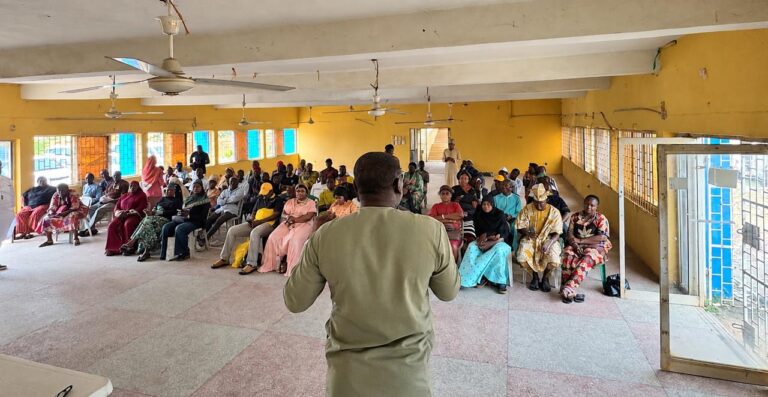
The farmers were already organized when the visitor arrived. Outside Lagos, poultry and aquaculture producers meet in clusters — informal groups that pool information, chase suppliers and talk to government agencies together.
Gustavo Galdo sat with two of them in August: 69 aquaculture farmers and 31 poultry farmers. Gustavo, Partners of the Americas’ senior director of agriculture and food security, is a Venezuelan with a masters in Civil and Environmental Engineering.
He works from Caracas, roughly 4,800 miles from the ponds he was standing beside — closer to the point than it sounds. The fish farmers said interest rates were too high and markets too hard to reach. The poultry farmers said feed, vaccines and chicks came late or not at all. Days earlier, in government offices in Lagos and Abuja, officials had named the same problems from the other end.
Sixty-two years in one hemisphere, then another
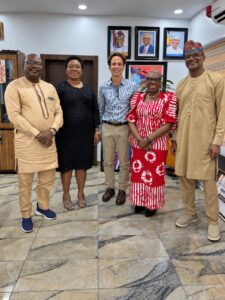
Partners has worked in Latin America and the Caribbean since 1964, and that record is what travels. The material is not new, and it is not African: the course was built at the U.S. Soybean Export Council’s Soy Excellence Center in Honduras, Partners has taught it to Latin American producers for years, and the two are now running it together in Nigeria. Same course, same partner, same soy. The country is the variable.
The center sits about 30 kilometers outside Tegucigalpa, at Zamorano, the Pan-American Agricultural School. It trains people who raise chickens, fish and pigs, and people who make animal feed. The Nigeria program covers the same work.
The course does not teach Nigerians to grow soy. It teaches them to raise the chickens and fish that eat it — what to put in the feed, how to keep disease out, and how to get a loan and reach a market.
That record is also behind Partners’ Growth program, which trains women farmers in Mauritania in financial skills, digital tools and crop insurance.
Where the money comes from
The U.S. Department of Agriculture did not write Partners a check. The sale of the cargo raised $11.3 million, and that cash pays for four years of training.
“The U.S. Department of Agriculture bought soybeans from American farmers and shipped them to Nigeria. We sold that cargo to Nigerian feed mills, who turn it into the feed these farmers buy. The sale pays for the training,” said Dr. Michael Moscarelli, Partners’ senior vice president of business development and an agricultural educator. “A farm that runs well keeps buying feed.
When Nigerian farmers raise more chickens and more fish, U.S. soybean growers gain buyers that last.”
Why the counting comes first
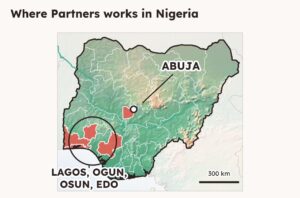
A research firm, Agramondis, has measured where the farmers stand today, so Partners can show what changes in four years. The U.S. Department of Agriculture is reading the report. Andrew Musa, the program’s director in Nigeria, has run a U.S. government farm program there before. He is meeting ministries, farmer groups and banks.
“The farmers I sat with in Lagos were already meeting on their own, without us. That is what I came to see,” said Gustavo. “Our job is to make sure that when the trainer’s plane leaves, the group keeps meeting, keeps buying good feed and keeps raising healthier chickens and fish.”