
Empowering Women of the Americas in STEM: Lilia Flores Cruz
Posting Date: February 8, 2022
Today on the International Day of Women and Girls in Science on February 11, we are celebrating empowering women and girls in science. Read below how Biomedical Engineer Lilia F. Cruz advanced her degree in STEM (science, technology, engineering, and math) through her participation in The Innovation Academy for Women of the Americas, a STEM-based university program sponsored by our 100,000 Strong in the Americas (100K) Innovation Fund. The program is implemented by the University of New Mexico, Universidad La Salle México, and Universidad Autónoma de Yucatán.
My name is Lilia Flores Cruz. I am a Biomedical Engineer and I have spent the last eight years of my life discovering what engineering is and delving into it. What I can say after this time is that engineering is not a straight line. It is more like a piece of clay that you can mold to the shape that best suits you.
How is this possible? In my case, it happened like this: In high school, I was interested in subjects, such as biology, health sciences, and physics. I was not particularly outstanding in them, but they inspired me a lot and made me curious. My mom always says: “Don’t study what you already know, study about what you want to know.”
I studied Biomedical Engineering at Universidad La Salle Laguna in Mexico. This program combined everything that interested me about health and engineering. During my fourth year at college, I got a scholarship and had the opportunity to participate in The Innovation Academy for Women of the Americas at the University of New Mexico, a summer program that is aimed at advancing female students in the STEM field. The objective of this program is to help students develop skills that will be useful in the future. During the summer of 2016 when I participated at The Academy, we attended conferences and events with successful women dedicated to science, had open conversations with them, and heard about their experiences. We visited the facilities of different research and development centers, such as Los Alamos, Sevilleta Field Station, and Spaceport America.
It was amazing to share all of these experiences with other women studying in different fields in STEM. I can say now that I have friends all over the continent who work in research in physics, pharmaceutics, the petroleum industry, chemistry, logistics, industrial processes, and environmental sciences. I learned about each one of them and I still keep in touch. They even help me sometimes when I need professional advice while working on something new.
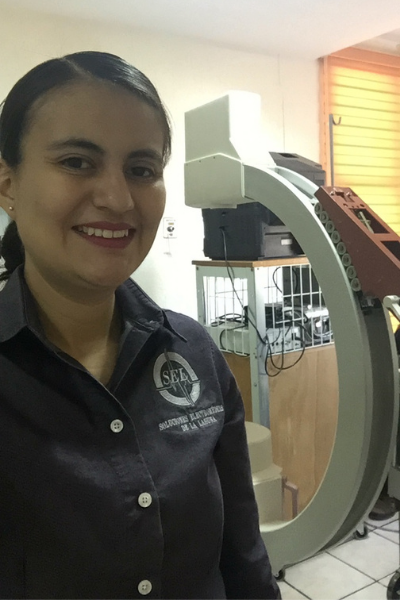
I graduated from college a year after my participation at The Academy and started working at a local biomedical engineering company called SEL. They offer solutions for specific biomedical concerns at hospitals and clinical laboratories. There, I worked as a field engineer, assisting hospitals and offering practical and immediate solutions to technical concerns about their medical equipment or facilities.
For almost four years, I had the opportunity to develop my skills in different areas of the company: fieldwork, medical personnel training, administration, and even sales. I got to know a little about everything that was done there. That’s where I discovered that engineering is incredibly broad and you can choose to focus on the approach that you like the most.
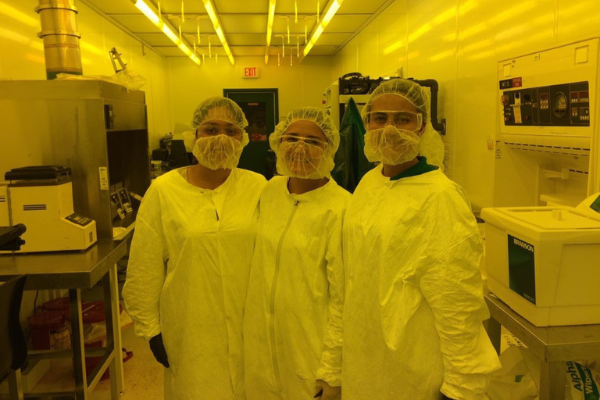
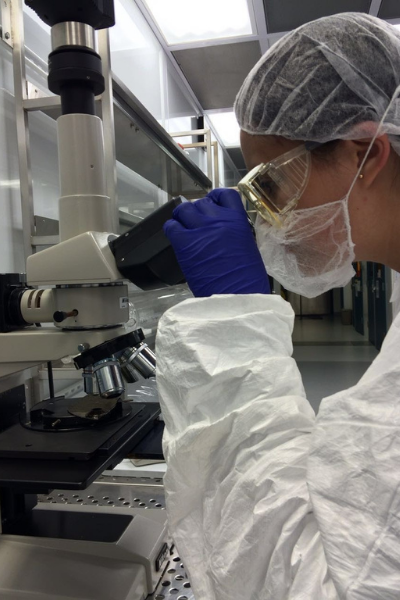
A year ago, I decided to quit my job and start a new adventure. I began attending the Tecnológico de Monterrey’s Graduate School of Engineering and Sciences, one of the most prestigious universities in Latin America. I received a full scholarship to do research and study for a Master’s Degree in Nanotechnology!
As a woman dedicated to STEM, it is clear to me that this path is full of variables and possibilities. While this is a field that has been dominated by men for centuries, it is important to promote strategies so that girls can see beyond gender stereotypes. There are women leading projects, doing research, designing devices, developing software, and demonstrating that with equal opportunities, it is possible for men and women to work together and achieve common goals. There are no “jobs for men” and “jobs for women.” Let’s show girls that they can dream of working in science and let’s give them the opportunities to achieve it.
There is still a lot of work to be done, but I am sure that we will see more and more girls actively participating in science. And we have many women waiting for them and ready to support them on their way.