
Empowering Women of the Americas in STEM: Isabel González
20220208
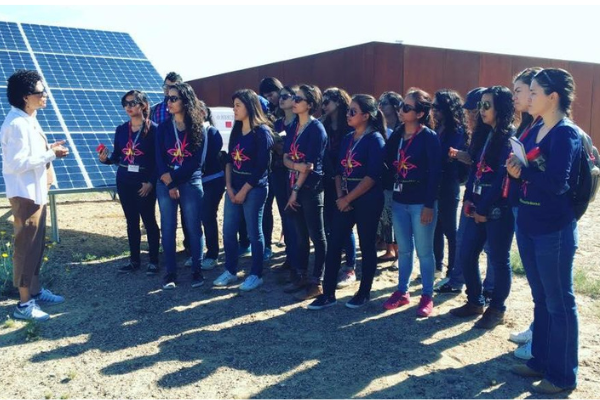
Today on the International Day of Women and Girls in Science on February 11, we are celebrating empowering women and girls in science. Read below how Chemical Engineering Student Isabel González was motivated to inspire other girls and women to pursue a career in STEM (science, technology, engineering, and math) through her participation in The Innovation Academy for Women of the Americas, a STEM-based university program sponsored by our 100,000 Strong in the Americas (100K) Innovation Fund. The program is implemented by the University of New Mexico, Universidad La Salle México, and Universidad Autónoma de Yucatán.
Before enrolling in college, I was not used to analyzing my classroom by statistics since I was never the only one interested in science, math, or technology. I remember more women were interested in the same specific areas I adored in high school. We were in the lab together or studying in the library just as hard. However, on the first day at university, as I entered the room where my advanced math lessons took place, I realized there were only three women in a 30-person class. I finally realized how lonely being part of the 10% felt.
I started to wonder where the people I used to study with went. As I got the chance to talk to the women I knew who were interested in STEM, I realized they did not see their interest as a career path. How come?
Only 36% of the members of STEM fields in Latin America identify as women, according to the Resource Foundation. The Foundation’s studies attribute cultural and socio-economical barriers to the lack of representation. It is true that in order to succeed in this particular field, a lot of money needs to be invested. Women tend to have a big disadvantage when it comes to acquiring the capital demanded by such careers. Women tend to have less access to scholarships and governmental support, according to the Mexican National Women’s Institute. Men can receive scholarships at a rate as much as 58% higher than women.
So, the answer to the question I made to my former classmates was actually that they did not want to swim against the tide. It takes a lot of love to commit to remaining swimming. What keeps us motivated once we decide to take part in this field is, when we are lucky enough to access a STEM-based education, that we realize that data, knowledge, and the exploration of the universe do not care about gender. There are no secrets that will only be revealed to men. However, we still have to work harder to get there as we are still considered minorities.
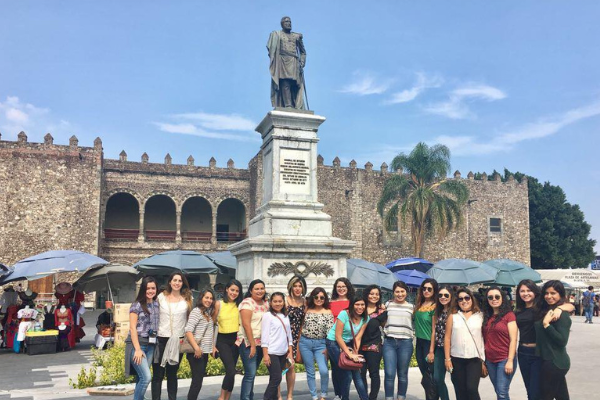
The two other women that took the math lessons next to me in the first semester became engineers and so did I. I got to be part of a community of very hardworking, tough, and interesting women during my years studying. Together, while navigating through our education, we found out how much we were needed in our community and how our efforts were going to be rewarded in the future.
There are bittersweet memories from the path I walked on. Teachers and classmates were eager to see us fail to prove the numbers and the odds were against us for a reason. We felt the pressure of millions of women who did not get the chance to be where we are on our shoulders. We still are the blueprint for generations to come on what we can achieve. Our library cards were more used than the ones of our male classmates, we spent more time in the laboratories, studying, and overall, more time in the university. Being the 10%, we had to achieve as much as the 90% of our male counterparts.
As I advance in my career, everything has been worth it. Women in STEM bond in a way that I had not experienced before. We tend to form communities and safe spaces where we empower each other and give ourselves room to breathe. We stand out together and encourage learning and questioning on a level that goes deeper than being book smart. I have found support in pursuing my true passion and I could not be more grateful.