
Partners Strengthens Coffee Cooperatives in Haiti
20151125
This post originally appeared on Partners of the Americas’ Agriculture and Food Security blog.
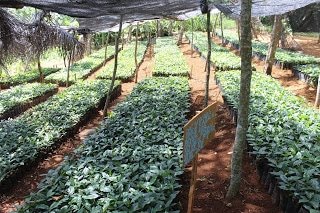
Between plant disease, pests, and changing weather, farmers face more than enough challenges related to growing, harvesting and producing their crops. Once the crop has been collected, there is another set of problems for farmers to address in order for them to sell their goods-ones that require a whole host of management skills that many small farmers lack.
Cooperatives allow farmers to work together, share tips and strategies, and organize policies for the whole sector. By pooling their resources, smallholder coffee farmers are better able to access financing, obtain technical assistance on improved farming practices, and sell their product at higher prices. In addition to in-the-field experience and training, Farmer-to-Farmer also finds volunteers who are able to build the organizational capacity of these small organizations to strengthen their abilities. Capacity is about growth: growth of the individual in knowledge, skills and experience, so that they are capable of setting, strengthening, and maintaining their own development goals.
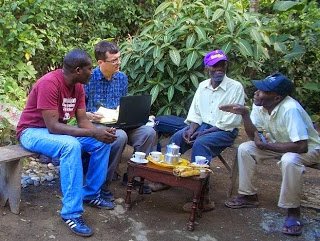 Partners’ F2F volunteers have worked with Makouti Agro Enterprises, a diversified agriculture business and marketing cooperative owned and operated in Haiti and several coffee cooperatives in order to bolster Haiti’s once vibrant coffee community. In the late 1700’s Haiti produced half of the world’s coffee. In 1949, it was the third largest coffee exporter. However, in 2012, Haiti was not even among the top 35 coffee producers as tracked by the International Coffee Organization. For several decades, coffee production in Haiti has been in steady and rapid decline as a result of issues such as deforestation, outdated farming techniques, and limited access to credit and export markets. Recent issues threaten to further weaken the coffee sector, and reduce the earnings of Haiti’s estimated 200,000 coffee farmers. Haiti has the lowest per capita income in the Western Hemisphere. If the country could regain even a small portion of its former position in the world coffee market, it could significantly improve living standards.
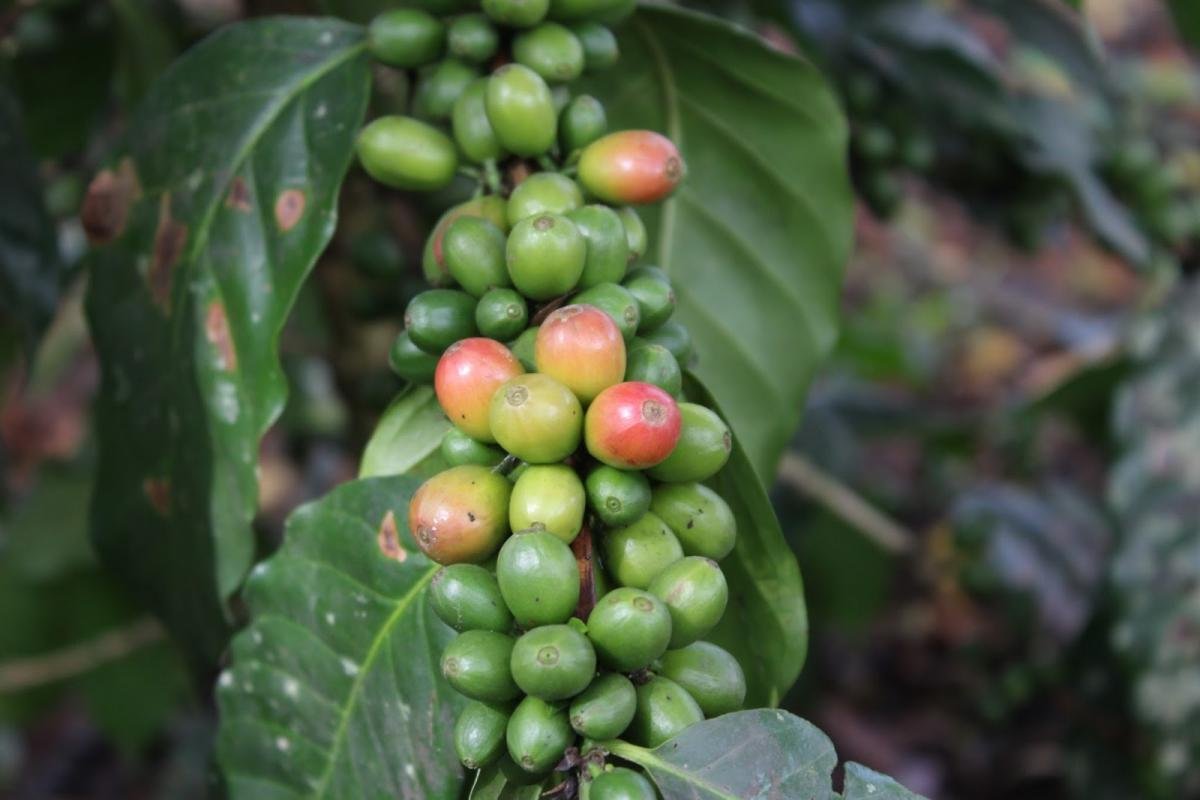 F2F volunteer Andy Lohof traveled down to tour and train some of Haiti’s major coffee cooperatives in December 2014. He found that while the original assignment was intended to strengthen Haitian coffee cooperatives’ branding and marketing abilities and practices, the cooperatives’ main obstacles were not lack of customer demand but rather management skills, working capital, and low coffee yields and production. Through exercises, questions, and discussions, the participants learned simple techniques for improving communication and organization in their cooperatives, marketing themselves to potential customers, keeping basic financial records, and setting priorities.
Cooperatives with weaker structures and untrained management are often limited in their ability to overcome other obstacles. For example, investors and donors are often unwilling to provide loans or grants to cooperatives that have no accounting records. A lack of working capital dramatically limits the amount of coffee the cooperatives are able to buy from its members and the sell to consumers. Farmer-to-Farmer and Makouti have linked the coffee cooperatives with Haiti Coffee, a California-based buyer which seeks to import as much 50,000 pounds of coffee per year. However, the cooperatives have a combined total of only 6,000 pounds of coffee to sell.
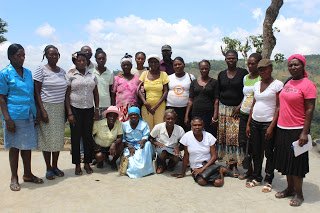 Lohof designed a training workshop to find solutions to these needs at the Makouti headquarters in Cap-Haitien. To facilitate exchanges and discussions among different cooperatives, they addressed the following topics: organization and communication, entrepreneurship, marketing/sales, accounting, and planning/priorities. The teaching methodology was very participatory: limited lectures and numerous questions, discussions, and exercises. At the end of the workshop, they announced the creation of a management committee composed of members of different cooperatives. The goal of this committee would be to facilitate exchange of ideas and collaboration among the cooperatives and Makouti in the coming months.
This effort continues to grow and become accessible to more farmers. Since 2014, efforts have been underway to form a Haiti chapter of the International Women’s Coffee Alliance (IWCA). Women in Haiti still face economic and social inequalities that prevent them from reaching their full potential. This is especially true in Haiti’s coffee sector where limited access to land, credit, training and leadership positions make it difficult for women to generate a sufficient income and escape poverty. Founded in 2003, IWCA is a non-profit that advocates for women in coffee, and provides a critical forum for them to build and foster relationships, gain essential leadership and technical skills, and access markets. In summer 2015, F2F volunteer Christa Michaud designed and led meetings and workshops for representatives from five different coffee growing regions to develop the organizational structure and governing documents for IWCA-Haiti.
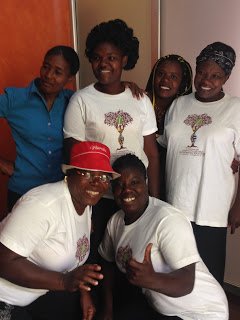 Forming an IWCA chapter in Haiti will empower and encourage women, providing them with the confidence, skills and organizational structure to develop policies and programs that reflect their needs and interests. The chapter will also seeks to have a positive, long-term impact on rebuilding Haiti’s coffee sector, as ensuring a fair, gender-inclusive value chain will help improve quality and production, attract international buyers, and ultimately, increase farmer incomes. Women will be able to control and secure resources for themselves, while continuing to share information and collaborate with other organizations working towards the same goal of improving coffee production in Haiti.
Significant progress was made in improving organizational capacity in Haiti, primarily due to the hard work and commitment from the farmers in the cooperatives and IWCA- Haiti. With continued support from Farmer-to-Farmer, these individuals can develop into strong leaders driving positive change in their lives, families and coffee-growing communities across Haiti.
 From November 16-December 11, F2F program partners are sharing their knowledge and experience providing technical assistance to farmers, farm groups, agribusinesses, service providers, and other agriculture sector institutions in developing and transitional countries. As aligned with Feed the Future, the U.S. Government’s global hunger and food security initiative, F2F works to support inclusive agriculture sector growth, facilitate private sector engagement in the agriculture sector, enhance development of local capacity and promote climate-smart development. Volunteer assignments address host-led priorities to expand economic growth that increases incomes and improves access to nutritious food. This blog series aims to capture and share this program experience.
This article is a contribution to a four-week blog series celebrating 30 years of USAID’s John Ogonowski and Doug Bereuter Farmer-to-Farmer (F2F) Program.