
Education
OVERVIEW
Preparing the next generation of students, workers, and leaders
Partners of the Americas’ education projects expand access to quality learning and opportunity for children and young people, from the early grades through higher education.
In schools, we combine school meals, nutrition, health, and WASH with literacy instruction and teacher training so that children attend school, stay engaged, and build strong foundational skills. We help strengthen national education systems and work with schools and communities to prevent violence, improve student well-being, and keep young people in school.
Beyond the classroom, higher education partnerships, youth leadership exchanges, and other educational and cultural exchanges connect people and institutions across the Americas, building workforce skills, cross-cultural understanding, and regional competitiveness.
This work prepares the next generation of students, workers, and leaders to strengthen their communities and the region.
Programs
Education
Ecuador
Improving Literacy and Nutrition in Ecuador’s Schools
U.S. Department of Agriculture McGovern-Dole International Food for Education and Child Nutrition Program Ecuador · 2026–2031
Chronic malnutrition and a deep learning crisis keep many children, particularly girls, in Ecuador’s highlands from thriving in school. To address this challenge, the US Department of Agriculture is funding a project through its McGovern-Dole International Food for Education and Child Nutrition Program. McGovern-Dole Ecuador uses commodities produced by US farmers to improve childhood nutrition. Partners of the Americas implements the project and works with local governments, the private sector, faith-based organizations, and civil society to transition Ecuador’s school-snack model to more nutritious hot meals. The project provides daily hot meals, structured literacy instruction, and teacher training. It also distributes take-home rations to girls, vulnerable boys, and volunteers. The project’s target provinces are Chimborazo, Cotopaxi, and Tungurahua, three high-poverty highland provinces.
The project is expected to reach 92,127 students from pre-primary through 10th grade across 360 schools. It will provide school meals for 540 feeding days over the life of the project. Partners of the Americas builds lasting capacity at every level of government, embedding local authorities as co-implementers. It also strengthens the financing mechanisms, procurement systems, and community structures the Government of Ecuador needs to progressively take on costs. This helps the project’s interventions outlast the project.
Education
United States, Latin America and the Caribbean
Facilitating Cultural and Educational Exchanges
U.S. Department of State Education and Culture Program · Since 1983
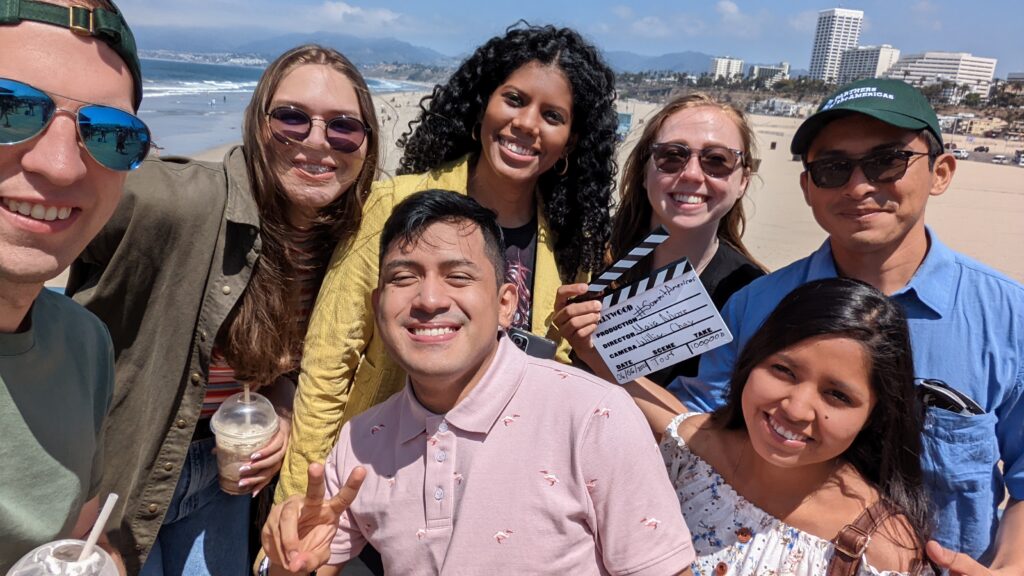
Lasting solutions to the most pressing challenges depend on community leaders with the relationships and experience to work across borders, yet few get that chance. Through the Education and Culture Program, the US Department of State invests in those leaders through a locally led model: communities generate the ideas, and Partners of the Americas’ network of more than 60 Chapters in over 30 countries carries them out. The program funds professional exchanges, group exchanges, and community projects designed and run by local volunteers. Partners of the Americas has implemented the program continuously since 1983, making it one of our longest-standing partnerships.
Participants return home with new skills and networks, and many launch projects that serve their communities long after the exchange ends. Recently, 23 leaders traveled on education and entrepreneurship exchanges, and four locally led projects in Brazil, Mexico, and Ecuador reached 686 people. In Mexico, ProSociedad trained 52 community facilitators in financial education and digital skills, and they now sustain themselves as a peer network.
Education
United States
Strengthening Literacy, Nutrition, and School Feeding in Honduras
U.S. Department of Agriculture McGovern-Dole International Food for Education and Child Nutrition Program Honduras · 2025–2031
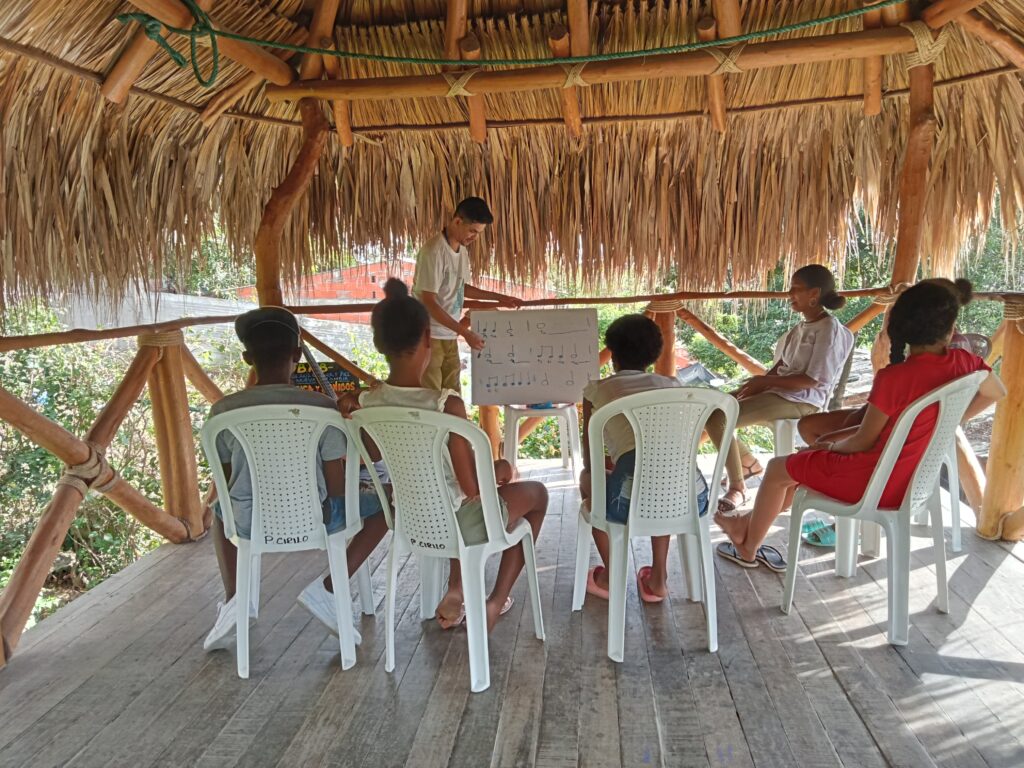
Food insecurity in Honduras prevents many children, particularly girls, from attending school, staying enrolled, and learning. Funded by the U.S. Department of Agriculture through its McGovern-Dole International Food for Education and Child Nutrition Program, Partners of the Americas is implementing a six-year project (October 2025–September 2031) to improve student nutrition, literacy, and educational outcomes in La Paz and Intibucá, two departments heavily affected by food insecurity. The project provides nutritious daily school meals combining U.S.-donated agricultural commodities with locally and regionally procured fresh foods, while strengthening literacy through educational materials and teacher training. It also rehabilitates school water infrastructure and builds local and national capacity to manage Honduras’ school feeding program sustainably.
By strengthening collaboration among schools, families, municipal and government stakeholders, and private-sector partners, the project aims to improve children’s health and learning while supporting local farmers and expanding trade. Partners of the Americas expects to reach 93,374 students from pre-primary through ninth grade across 1,955 schools, train 4,902 teachers and school staff, and engage 10,000 parents and community members in supporting children’s learning and nutrition.
Education
United States, Latin America and the Caribbean
Advancing U.S. Leadership through Higher Education Partnerships, Student Mobility, and Workforce Development
U.S. Department of State 100,000 Strong in the Americas · Since 2014
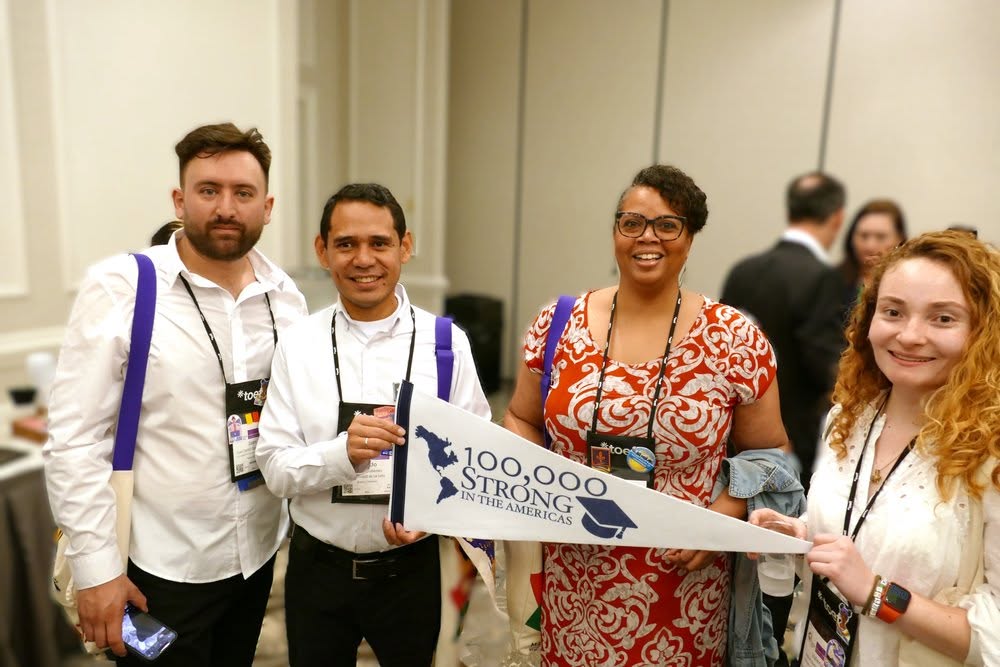
Many students across the Americas graduate without the applied skills and international experience employers increasingly seek, and study abroad is often out of reach. Through the US Department of State’s 100,000 Strong in the Americas Innovation Fund, Partners of the Americas runs competitive grants that pair US colleges and universities with institutions across the hemisphere. Funded partnerships expand student training and mobility, launch applied research, and build workforce skills around shared regional challenges. The initiative has been supported by many major US companies, including Amazon, Exxon, and Coca-Cola, and has engaged 619 institutions in 26 countries and 49 US states.
Grants are designed as seed funding, launching partnerships and programs that institutions then sustain and scale with their own resources. To date, the Innovation Fund has awarded 352 grants, engaging more than 13,700 students and faculty in exchange and collaborative learning opportunities. It has mobilized more than $25 million through public, private, and academic partnerships to expand educational exchanges and workforce development. Because each grant competition can be themed and sponsored, the Innovation Fund offers companies, foundations, and regional governments a ready-made vehicle to reach students in priority sectors or regions.
Past Programs
Turning Team Sports into Job Skills for Young People Across the Americas
US Department of State and Inter-American Development Bank · 2005–2017
Across Latin America and the Caribbean, nearly one in five young people neither work nor study, and many live in communities where violence and a shortage of jobs make steady work hard to find. A Ganar (“to win” in Spanish) is Partners of the Americas’ flagship youth program. It uses team sports, mainly soccer, to teach young people ages 16 to 24 six skills employers value: teamwork, communication, discipline, respect, focus on results, and continual self-improvement. Certified coaches teach these skills on the field and in the classroom in a course of at least 100 hours. Youth then receive vocational training chosen with local employers and an internship or apprenticeship with a local business, with mentors and follow-up support throughout. Since 2005, the program has operated across 19 countries in Latin America and the Caribbean, run by local organizations with support from the US Government, the Inter-American Development Bank, the Nike Foundation, and others.
A Ganar began as a pilot in Brazil, Ecuador, and Uruguay and has since reached more than 20,000 young people. Countries include Colombia, the Dominican Republic, Guatemala, Haiti, Honduras, Jamaica, Mexico, and Suriname. In the six-year US Government-funded program across eight countries, 4,313 young people completed all three training phases, two thirds of graduates found work, started a business, or returned to school, and 1,057 businesses and organizations hosted interns. Partners of the Americas trained 61 local organizations to run the program, and the model won the International Labour Organization’s What Works award. In Colombia, the national training agency SENA brought A Ganar’s sports-based skills training to 65 of its centers. The program demonstrates Partners of the Americas’ ability to turn a simple idea into a replicable model that local organizations and employers carry forward.
Helping Migrant Children Learn and Belong in Colombia
US Department of State · 2021–2025
Colombia is home to nearly 3 million Venezuelan migrants, including about 600,000 children in public schools, and many face barriers to enrolling, staying in school, and catching up. Through the US Government Juntos Aprendemos (Together We Learn) project, Partners of the Americas worked with Colombia’s Ministry of Education and local education authorities in nine cities to help migrant and Colombian children enroll, stay, and learn. The project supported policies that guarantee every child’s right to education, regardless of migration status. It trained teachers and school leaders, offered reading support and accelerated learning for students who had fallen behind, and engaged families and community groups. The project was delivered with three Colombian partners: Fundación Carvajal, Parque Explora, and Proantioquia.
The project reached more than 155,000 students and 5,400 teachers in over 1,500 schools. It helped produce a guide on the right to education for migrant students, which was shared with all 97 education secretariats nationwide, and several cities adopted new policies for migrant students and accelerated learning. In a tutoring program for struggling readers and math students, the share of students at the lowest reading comprehension levels fell by about 23 percentage points. The project demonstrates Partners of the Americas’ ability to work with national and local governments and Colombian organizations to build education systems that include migrant and host communities, leaving policies, teaching guides, and stronger local partners in place.
Improving Literacy and Nutrition in Ecuador’s Schools
U.S. Department of Agriculture McGovern-Dole International Food for Education and Child Nutrition Program Ecuador · 2026–2031
Chronic malnutrition and a deep learning crisis keep many children, particularly girls, in Ecuador’s highlands from thriving in school. To address this challenge, the US Department of Agriculture is funding a project through its McGovern-Dole International Food for Education and Child Nutrition Program. McGovern-Dole Ecuador uses commodities produced by US farmers to improve childhood nutrition. Partners of the Americas implements the project and works with local governments, the private sector, faith-based organizations, and civil society to transition Ecuador’s school-snack model to more nutritious hot meals. The project provides daily hot meals, structured literacy instruction, and teacher training. It also distributes take-home rations to girls, vulnerable boys, and volunteers. The project’s target provinces are Chimborazo, Cotopaxi, and Tungurahua, three high-poverty highland provinces.
The project is expected to reach 92,127 students from pre-primary through 10th grade across 360 schools. It will provide school meals for 540 feeding days over the life of the project. Partners of the Americas builds lasting capacity at every level of government, embedding local authorities as co-implementers. It also strengthens the financing mechanisms, procurement systems, and community structures the Government of Ecuador needs to progressively take on costs. This helps the project’s interventions outlast the project.
Facilitating Cultural and Educational Exchanges
U.S. Department of State Education and Culture Program · Since 1983
Lasting solutions to the most pressing challenges depend on community leaders with the relationships and experience to work across borders, yet few get that chance. Through the Education and Culture Program, the US Department of State invests in those leaders through a locally led model: communities generate the ideas, and Partners of the Americas’ network of more than 60 Chapters in over 30 countries carries them out. The program funds professional exchanges, group exchanges, and community projects designed and run by local volunteers. Partners of the Americas has implemented the program continuously since 1983, making it one of our longest-standing partnerships.
Participants return home with new skills and networks, and many launch projects that serve their communities long after the exchange ends. Recently, 23 leaders traveled on education and entrepreneurship exchanges, and four locally led projects in Brazil, Mexico, and Ecuador reached 686 people. In Mexico, ProSociedad trained 52 community facilitators in financial education and digital skills, and they now sustain themselves as a peer network.
Strengthening Literacy, Nutrition, and School Feeding in Honduras
U.S. Department of Agriculture McGovern-Dole International Food for Education and Child Nutrition Program Honduras · 2025–2031
Food insecurity in Honduras prevents many children, particularly girls, from attending school, staying enrolled, and learning. Funded by the U.S. Department of Agriculture through its McGovern-Dole International Food for Education and Child Nutrition Program, Partners of the Americas is implementing a six-year project (October 2025–September 2031) to improve student nutrition, literacy, and educational outcomes in La Paz and Intibucá, two departments heavily affected by food insecurity. The project provides nutritious daily school meals combining U.S.-donated agricultural commodities with locally and regionally procured fresh foods, while strengthening literacy through educational materials and teacher training. It also rehabilitates school water infrastructure and builds local and national capacity to manage Honduras’ school feeding program sustainably.
By strengthening collaboration among schools, families, municipal and government stakeholders, and private-sector partners, the project aims to improve children’s health and learning while supporting local farmers and expanding trade. Partners of the Americas expects to reach 93,374 students from pre-primary through ninth grade across 1,955 schools, train 4,902 teachers and school staff, and engage 10,000 parents and community members in supporting children’s learning and nutrition.
Advancing U.S. Leadership through Higher Education Partnerships, Student Mobility, and Workforce Development
U.S. Department of State 100,000 Strong in the Americas · Since 2014
Many students across the Americas graduate without the applied skills and international experience employers increasingly seek, and study abroad is often out of reach. Through the US Department of State’s 100,000 Strong in the Americas Innovation Fund, Partners of the Americas runs competitive grants that pair US colleges and universities with institutions across the hemisphere. Funded partnerships expand student training and mobility, launch applied research, and build workforce skills around shared regional challenges. The initiative has been supported by many major US companies, including Amazon, Exxon, and Coca-Cola, and has engaged 619 institutions in 26 countries and 49 US states.
Grants are designed as seed funding, launching partnerships and programs that institutions then sustain and scale with their own resources. To date, the Innovation Fund has awarded 352 grants, engaging more than 13,700 students and faculty in exchange and collaborative learning opportunities. It has mobilized more than $25 million through public, private, and academic partnerships to expand educational exchanges and workforce development. Because each grant competition can be themed and sponsored, the Innovation Fund offers companies, foundations, and regional governments a ready-made vehicle to reach students in priority sectors or regions.