
November NL 2025 – The Voice of a People:
Posting Date: November 26, 2025
THE VOICE OF A PEOPLE
A project that seeks to preserve a language
By: Constanza Godoy Gimena and Andrea Saldivia Ayelef
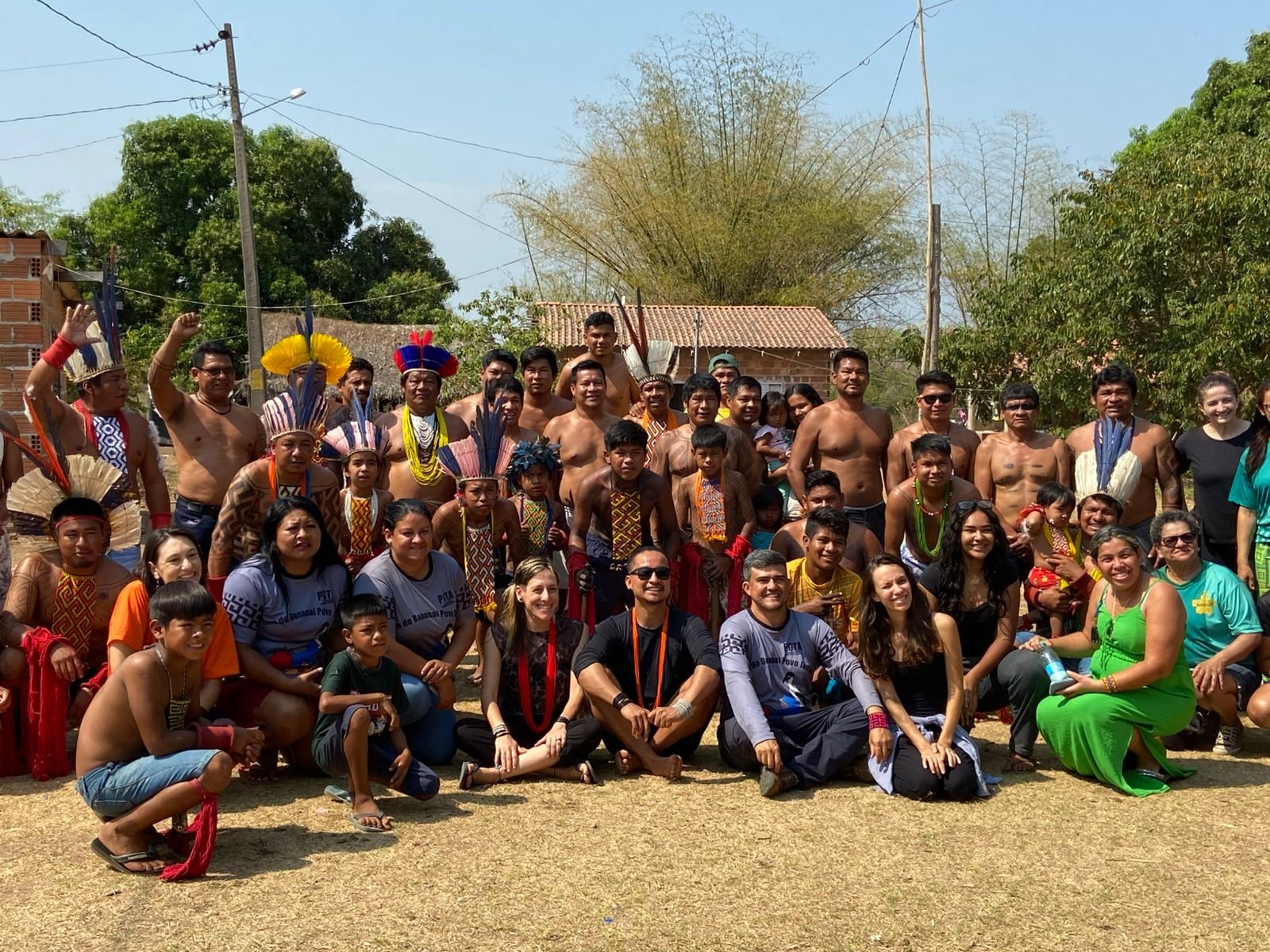
In the heart of northern Brazil, on Bananal Island, lives the Javaé people. There, words do more than communicate — they preserve memory and sustain community life. In that
territory, the project “Letramentos Iny Rybè Javaé: Educational Strategies for Sociocultural Appreciation” was born — an experience that brings together ancestral wisdom and contemporary education to keep the Iny language alive.
Driven by the Observatory of Traditional Peoples of Tocantins and the University of Gurupi with its PartnersCampus, the project seeks to strengthen the language and knowledge of the Javaé people through bilingual education. “We don’t work for them; we work with them. Every action is born out of respect and shared decision-making,” says Professor Marcilene Araújo, coordinator of the initiative.
The project began in 2022 as a response to a demand from Indigenous communities: to create educational materials developed from their own culture. This led to the creation of the first glossaries and schoolbooks in the Iny language, collectively produced by Indigenous educators and university students.
Partners play a fundamental role within the project’s cooperation network, providing financial, academic, and international outreach support. Its contribution made possible milestones such as the publication of the first Javaé alphabet book
University voices supporting the project
Among the young participants is Keyliane dos Anjos Leitão, an education student. “During one of the teaching workshops, an Indigenous teacher told a Javaé story to the children. As he spoke in Iny, I felt that each word carried a unique way of seeing the world. It was a meeting between the academic and the ancestral,” she recalls.
Her experience transformed her view of teaching: “I learned that to educate is also to listen and to recognize that there are many ways of producing knowledge. Each word written in the glossary is an act of care and love for the memory of a people.”
Student Sarah Houganys Lacerda dos Santos, a scholarship holder in 2025, also participates in the creation of a bilingual glossary. “The schools needed proper materials. That’s why we developed didactic resources that strengthen teaching and value Javaé culture,” she explains.
Voices from the village
From within the community itself, a member of the Javaé people proudly expressed what the project meant: “The project was very important in our territory, in our village. The people were the ones who strengthened the school, the work of the teachers and students. For us, it was something new, and by doing good things, it made us stronger.”
His words reflect the project’s deeper meaning: a partnership built from within, where the university does not teach but shares and learns.
“Letramentos Iny Rybè Javaé” shows that preserving a language means preserving a way of life. Every word spoken in Iny by a child is a seed that will blossom in the future.
Constanza and Andrea are communication students at the Universidad Nacional del Comahue in Argentina, where Mapuche is taught as well as European languages. The reporters are committed to safeguarding native cultures by building bridges between universities and indigenous peoples. They are trying to figure out how to accept Professor Marcilene’s invitation to visit the Javaé and the University of Gurupi. (a 4,000 mile drive.)